December 15, 2013
Breaking Bad | Season 5 | Episode 16 | “Felina”

Walt and his baby blue part ways.
After six years, Breaking Bad is finally over – a Shakespearean tragedy in five acts and one of the defining television shows of modern times. There’s little I can say below that hasn’t been covered elsewhere, though Walt probably summed it up best with his simple “It’s over.”
This episode is reviewed at Emilia Jordan and the A.V. Club, and you can read more about it at AMC and IMDb.
Read the rest of this entry »
 Leave a Comment » |
  Breaking Bad, season 5, television | Tagged: AMC, Breaking Bad, e16, episode 16, Felina, s05, s5, season 5, television, TV |
  Permalink
 Posted by John
October 29, 2013
Breaking Bad | Season 5 | Episode 15 | “Granite State”

It’s over when I say it’s over.
Walt is disappeared out to rural New Hampshire, and quickly finds that he can have absolutely no influence over events back home. Out of options, he comes to a decision about his exit – but what is his plan?
This episode is reviewed at Emilia Jordan and the A.V. Club, and you can read more about it at AMC and IMDb.
Read the rest of this entry »
Leave a Comment » | Breaking Bad, season 5, television | Tagged: AMC, Breaking Bad, e15, episode 15, Granite State, s05, s5, season 5, television, TV | Permalink
Posted by John
September 18, 2013
Breaking Bad | Season 5 | Episode 14 | “Ozymandias”

The lone and level sands stretch far away.
There are no winners in this week’s episode (with the possible exception of Uncle Jack and his crew) as all of Walt’s decisions and lies finally catch up with him, ripping everyone’s world apart. There is a little science to talk about, if you spotted it before everything kicked off.
This episode is reviewed at Emilia Jordan and the A.V. Club, and you can read more about it at AMC and IMDb.
Read the rest of this entry »
1 Comment | Breaking Bad, season 5, television | Tagged: AMC, Breaking Bad, e14, episode 14, Ozymandias, s05, s5, television, TV | Permalink
Posted by John
September 11, 2013
Breaking Bad | Season 5 | Episode 13 | “To’hajiilee”
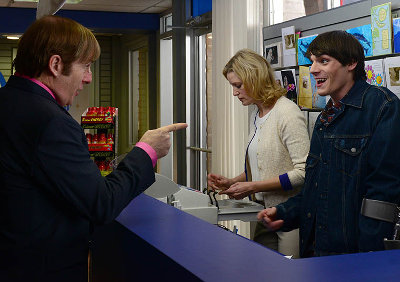
Don’t drink and drive. But if you do, better call Saul!
Bluffing, confrontations and desperation in tonight’s episode, with the only really certain thing being that there are several episodes left with which Breaking Bad can continue to surprise us.
This episode is reviewed at Emilia Jordan and the A.V. Club, and you can read more about it at AMC and IMDb.
Read the rest of this entry »
1 Comment | Breaking Bad, season 5, television | Tagged: AMC, Breaking Bad, e13, episode 13, methamphetamine, purity, refractometer, s05, s5, season 5, television, To'hajiilee, TV | Permalink
Posted by John
September 2, 2013
Breaking Bad | Season 5 | Episode 12 | “Rabid Dog”
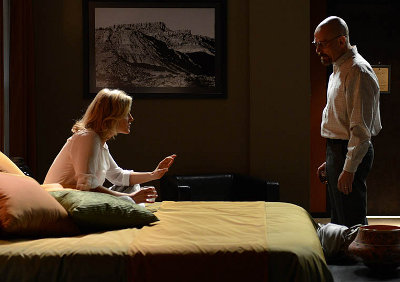
What’s one more?
After four and a half seasons of being pushed around, Jesse is finally wresting the rudders back and will get his revenge. Or will he? If there’s one thing that Breaking Bad has been consistent on, it’s cooking up surprises for us.
This episode is reviewed at Emilia Jordan and the A.V. Club, and you can read more about it at AMC and IMDb.
Read the rest of this entry »
2 Comments | Breaking Bad, season 5, television | Tagged: AMC, Breaking Bad, e12, episode 12, Rabid Dog, s05, s5, season 5, television, TV | Permalink
Posted by John
September 2, 2013
Breaking Bad | Season 5 | Episode 11 | “Confessions”

Walt and Jesse, on speaking terms for perhaps the last time.
Just as Walt gets Hank off his back – temporarily, at least – Jesse is coming for revenge. Thrilling television, but nothing for this blog to talk about until Walt starts applying science to his problems again.
This episode is reviewed at Emilia Jordan and the A.V. Club, and you can read more about it at AMC and IMDb.
Read the rest of this entry »
1 Comment | Breaking Bad, season 5, television | Tagged: AMC, Breaking Bad, Confessions, episode 11, s05, s5, season 5, television, TV | Permalink
Posted by John
August 24, 2013
Breaking Bad | Season 5 | Episode 10 | “Buried”

Walt surveys the location for his buried treasure.
It’s time to choose loyalties this week, with everyone save Jesse scrambling to set themselves up for the final confrontation(s). I’m not expecting a lot of science in the latter half of this season – Walt will most likely be too busy.
This episode is reviewed at Emilia Jordan and the A.V. Club, and you can read more about it at AMC and IMDb.
Read the rest of this entry »
5 Comments | Breaking Bad, season 5, television | Tagged: AMC, Breaking Bad, Buried, e10, episode 10, s05, s5, season 5, television, TV | Permalink
Posted by John
August 13, 2013
Breaking Bad | Season 5 | Episode 9 | “Blood Money”

Walt surveys his life that was.
After an agonising wait, Breaking Bad returned to our screens last weekend to wrap up season five and remind us why we started watching it in the first place. As Hank pieces together the true picture behind the Heisenberg meth empire and Walt brazenly confronts him about it, Jesse starts to break down over the things he’s been party to.
This episode is reviewed at Emilia Jordan and the A.V. Club, and you can read more about it at AMC and IMDb.
Read the rest of this entry »
1 Comment | Breaking Bad, season 5, television | Tagged: AMC, Blood Money, Breaking Bad, e09, e9, episode 9, s05, s5, season 5, television, TV | Permalink
Posted by John
March 19, 2013
Fringe | Season 4 | Episode 20 | “Worlds Apart”

The Fringe-2 team’s final exit. We’ll probably see them again.
A race against time to stop Jones and the Cortexiphan Globetrotters, with pretty much no science to comment on. I suspect the two finales will be the same, but don’t let that stop you from watching them.
This episode is debunked at Polite Dissent and Cordial Deconstruction, and you can read more about it at Fox, IMDb and the A.V. Club.
Leave a Comment » | Fringe, season 4, television | Tagged: e20, episode 20, Fox, Fringe, s04, s4, season 4, television, TV, Worlds Apart | Permalink
Posted by John
February 23, 2013
Fringe | Season 4 | Episode 19 | “Letters of Transit”

Walter wakes up in the far future, which bears an uncanny resemblance to downtown Vancouver.
A dystopian future episode in fine sci-fi tradition this week, with pretty much no science to write about.
This episode is debunked at Polite Dissent and Cordial Deconstruction, and you can read more about it at Fox, IMDb and the A.V. Club.
Random thoughts
I’m sure we all know that matter-antimatter annihilations don’t happen as depicted, and I assume that Walter merely activated some sort of antimatter-powered disintegration device. For the sake of curiosity, though, how much antimatter would be required to demolish (not vapourise) a building? If we assume that a building can be brought down by the equivalent of 1 Mt (megaton of TNT), which is the yield of a typical conventional bomb, then we can work backwards to see how much antimatter would be required:
1 Mt TNT is about 4.184 x 10¹⁵ J. Using mass-energy equivalence for matter-antimatter explosions (E = m c2) gives a requirement of around 23 g of antimatter. Current Earth technology is capable of producing a few billionths of a gram annually, at a cost of a few hundred million dollars.
2 Comments | Fringe, season 4, television | Tagged: antimatter, e19, episode 19, Fox, Fringe, Letters of Transit, s04, s4, season 4, television, TV | Permalink
Posted by John

 weak interactions